
 Facebook
 X
 Pinterest
 Copy Link
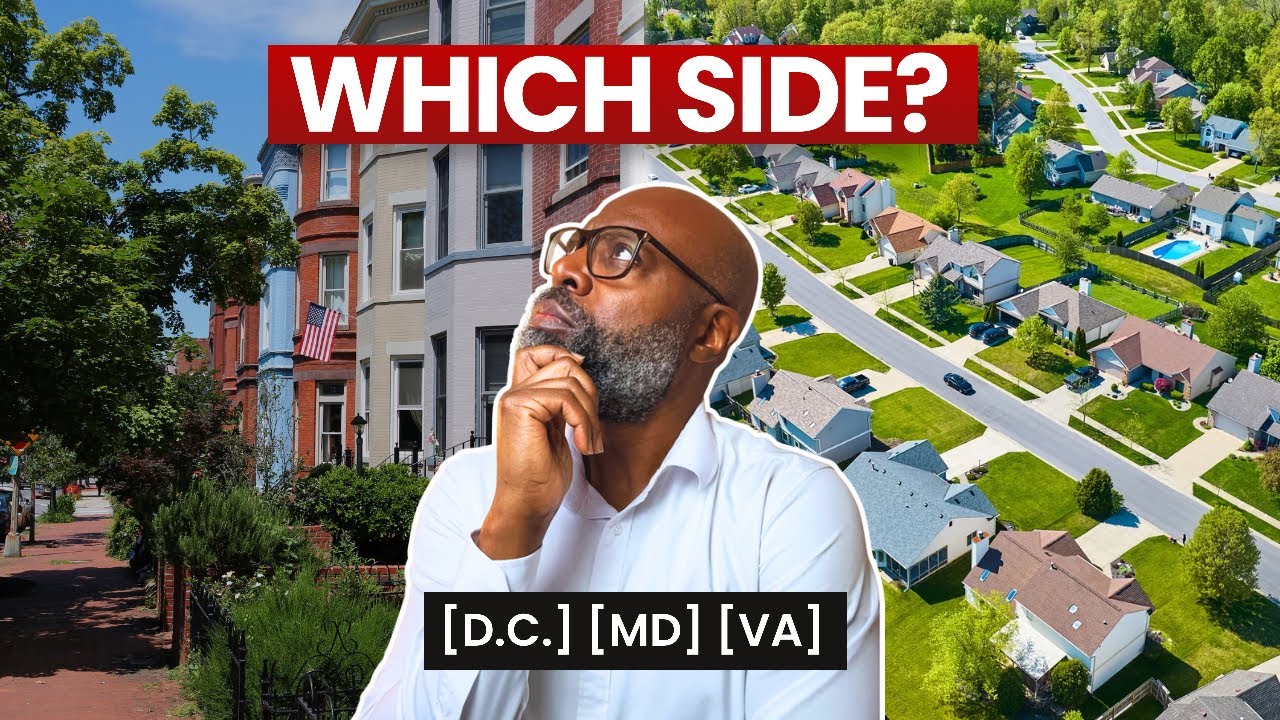
If you’re moving to the DMV, the biggest money decision you make may not be the house. It’s which side of the line you buy on: DC, Maryland or Virginia.
Same paycheck, same commute, but the taxes, closing costs and everyday costs can differ by thousands of dollars a year. I’m licensed in all three, so I don’t have a favorite. Here’s how they compare on the five things that hit your wallet directly.
Planning a move to the DMV? Book a free 15-minute call and we’ll talk through your plan.
1. Home prices: where your money goes furthest
Median prices are a starting point, but they can mislead you. A county median mixes condos, townhomes and detached houses into one number. An area that looks “cheap” may simply have a lot of one-bedroom condos.
So compare the same type of home. In my experience working across all three:
- Prince George’s County, MD: new three-level townhomes have started around the low $400,000s, and new single-family homes from the low $400,000s to $850,000+ depending on the lot.
- Northern Virginia: a comparable new townhome often runs $625,000 to $750,000.
- Washington, DC: townhomes and rowhomes commonly run past $850,000.
Dollar for dollar, Prince George’s County still gives you the most house close to the city. Property type matters more than the median.
2. Income tax
- Virginia: top rate of 5.75% on income over $17,000, and no separate county income tax.
- Maryland: state income tax plus a county income tax. Prince George’s and Montgomery counties are at 3.2%, so most households land roughly in the 8% to 9% range combined.
- DC: graduated brackets; many households fall between 6.5% and 8.5%, with a top rate of 10.75% for the highest earners.
On income tax alone, Virginia usually wins, and over a career that difference adds up.
3. Property tax
DC surprises people here. The residential rate is $0.85 per $100 of assessed value, and owner-occupants can claim a homestead deduction that lowers the bill further. In Maryland, Prince George’s County is one of the higher rates in the region (around 1.3%, depending on your town), and Montgomery County is lower.
The nuance: a low rate on an expensive home doesn’t make it cheap. A $900,000 DC rowhome at 0.85% is roughly $7,650 a year before the homestead deduction. A $476,000 home in Prince George’s at about 1.3% is roughly $6,200. The bills end up closer than the rates suggest, so always look at the rate and the price together.
4. Closing costs and first-time buyer programs
- Virginia generally has the lowest transfer and recordation taxes of the three.
- Maryland sits in the middle. First-time Maryland buyers are typically exempt from their share of the state transfer tax, and programs like the Maryland Mortgage Program and Prince George’s County’s Pathway to Purchase (up to $50,000) can make a big difference.
- DC has the highest recordation tax (1.1% under $400,000 and 1.45% above), but qualifying first-time buyers may get it reduced or removed, and DC’s HPAP program offers down payment help.
For first-time buyers, Maryland and DC often come out ahead once assistance is factored in. This is where people leave money on the table by not asking.
5. The costs nobody warns you about
- Virginia: an annual personal property tax on your car, and if you commute daily on toll roads like I-66 or the Dulles Toll Road, that can add a few hundred dollars a month.
- DC: you may be able to go car-free, which helps offset higher prices. If you keep a car, budget for parking permits or a garage.
- Maryland: no car tax, and Metro access from many inner Prince George’s and Montgomery neighborhoods.
If you’re military or retiring from federal service, check how each jurisdiction taxes retirement income. The rules differ and can be worth thousands a year.
Which one fits you?
- Virginia if you want predictable income taxes and the lowest closing costs, and you don’t mind tolls or the car tax.
- Maryland (especially Prince George’s County) if you want the most home for your money, new construction in the $400,000s to $600,000s, or strong first-time buyer help.
- DC if you want a walkable, transit-first lifestyle and have the budget for it.
My honest take
For most of my first-time buyers right now, I point to Prince George’s County: new construction, about 20 minutes from the city, and real assistance programs. But there’s no universal winner, only the right answer for your budget and lifestyle.
If you’re planning a move, call or text me at (240) 304-6513 or send me a message. We’ll run your actual numbers before you sign anything.
Book a free 15-minute call with me →
Figures are approximate as of 2026 and vary by neighborhood and situation. This post is for general information only and is not tax, legal or financial advice; verify details with a qualified professional. Equal Housing Opportunity.
